By Glenn Hopper ·
Supplier Savings Have to Survive the Invoice
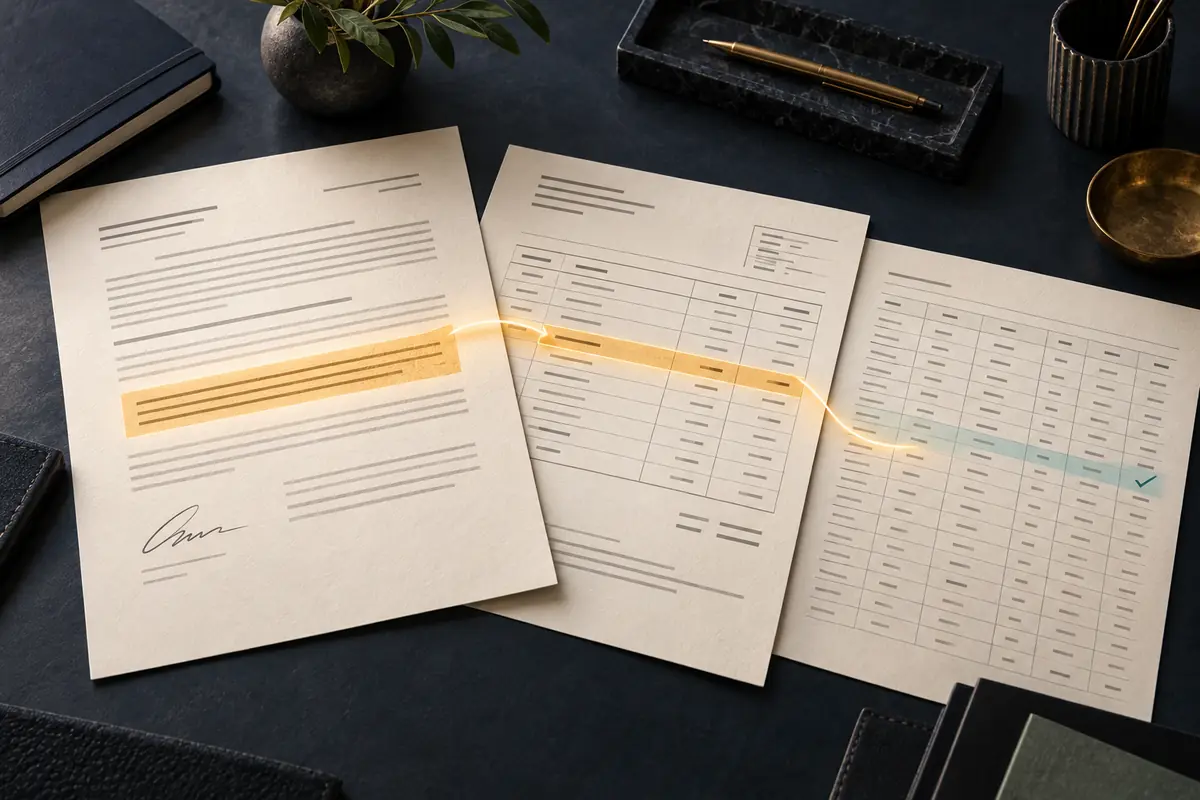
In its October 5 release, Icertis described a survey of 500 U.S. procurement leaders in which one-third estimated their organizations lost more than $1 million annually through unrealized supplier terms. The survey report adds that 58% discovered, within the past year, that they were paying suppliers more than their contracts required. These are self-reported findings from a contract software vendor, with limited public methodology, and they don't establish what AI can recover. They do give finance and procurement a concrete place to look together: the distance between the price someone negotiated and the price the business actually paid.
A signed amendment can reduce a component's unit price while the purchasing system keeps the old price, the supplier keeps invoicing against it, and AP keeps matching invoices to perfectly respectable purchase orders. Everyone has followed the process. The savings presentation may even have excellent typography. For a corporate controller or a PE operating team, the work starts by connecting the executed agreement and its amendments to supplier IDs, purchasing entities, item codes, receipts and invoice lines. An enterprise supplier may have several contracts covering different subsidiaries, so a match on the supplier's name alone leaves plenty of room for an expensive misunderstanding.
AI can help read those agreements, extract candidate terms and link each proposed field to its source clause. The review record needs the applicable entity, item, currency, unit of measure, effective date, price, volume tier, discount conditions and rebate period, including later amendments that supersede earlier terms. Procurement validates that interpretation before anyone uses it in a calculation. Unclear wording, missing schedules and uncertain item matches go into an exception queue. The model can propose a connection between a contract description and an invoice description, with supporting evidence; an approved mapping gives the calculation something stable to use the next time that item appears.
Once the terms are validated, deterministic rules calculate the differences. SAP's invoice administration guide already documents exceptions for differences against orders and contracts, along with payment-term checks. A team extending those controls to extracted contract terms still has to handle the details. In a hypothetical example, an amendment reduces a price from $10 to $9.50 for qualifying deliveries beginning July 1. Twenty thousand eligible units billed at $10 produce a $10,000 difference before applicable adjustments. The calculation needs the contract's date trigger, matching units, returns, credits already issued and any rules about combining discounts. A fluent paragraph from a model doesn't settle any of those inputs.
Procurement and AP then review a case containing the clause, affected invoice lines, calculation and proposed resolution. Procurement confirms the commercial interpretation; AP checks invoice and credit history and routes the approved request through the existing supplier process. Legal reviews disputed language, and Accounting approves the treatment. The assistant can assemble the packet and draft correspondence, while people authorize supplier disputes, payment changes and journal entries. The same finance AI governance controls apply here: scoped access, named approvers and a record of what was proposed, changed and accepted. Across a PE portfolio, each company's access and contractual rights need to remain separate.
Keep identified, validated and realized value separate in the reporting. An identified difference stays open while the team checks eligibility; a validated claim still needs an owner, a due date and evidence of resolution. Finance can record realized recoveries when the agreed evidence is available, reconciling supplier credits or refunds to AP and ledger records. A reduction on an unpaid invoice should also be distinguished from cash returned after payment. Give every case a unique reference so the same benefit doesn't appear once in procurement's savings total and again in AP's recovery total. Record rejected cases and their reasons, including the entirely plausible discovery that the supplier billed correctly.
One-time recoveries and recurring corrected pricing also need separate reporting. Recovering the hypothetical $10,000 says something different from preventing that error on future deliveries; annualizing it requires a volume assumption and subsequent invoices that confirm the corrected price. Neither amount automatically becomes current EBITDA. For IFRS reporters, IAS 2 deducts purchase discounts and rebates from inventory cost and generally recognizes that cost as an expense when the goods are sold. The controller still determines the account and period, checks existing accruals and resolves any prior-period implications. Procurement's commercial result, cash movement and the P&L effect can arrive on different dates.
Next quarter, a bounded pilot could follow one category through a full invoice and rebate cycle, with a documented baseline and enough history to check prior credits. Track how often reviewers confirm the AI's proposed clause and item matches, how long cases take to resolve, and whether corrected prices persist on later invoices. Include review time, integration work and ongoing fees when assessing the return. The agent harness needs to preserve the evidence through those handoffs. As recurring errors become visible, procurement and AP can fix the price tables, amendment handoffs and ownership problems that created them, giving next quarter's savings a better chance of reaching the accounts.
 Ask SAL